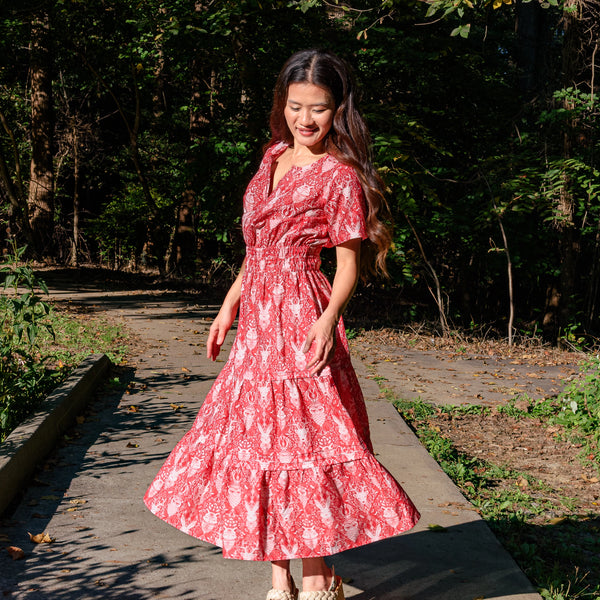
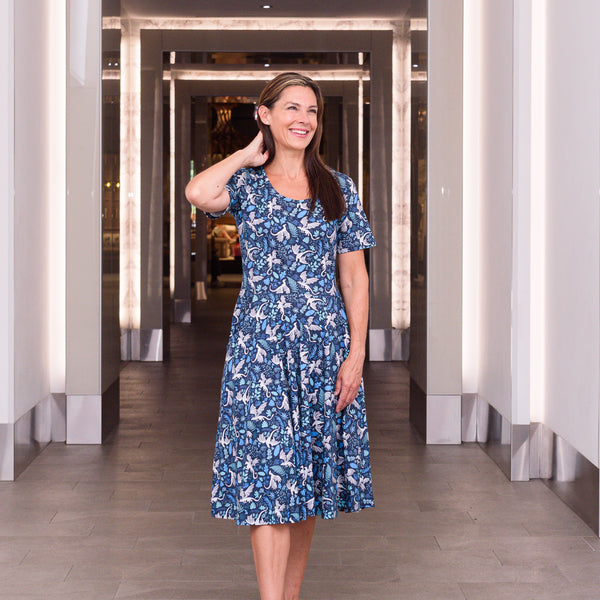
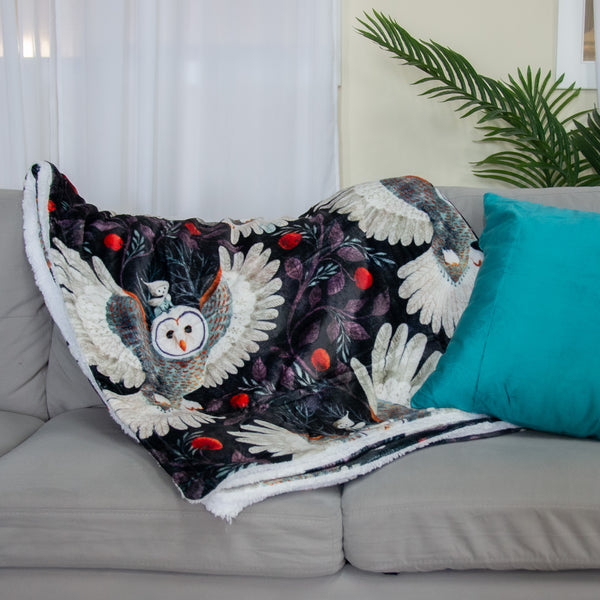
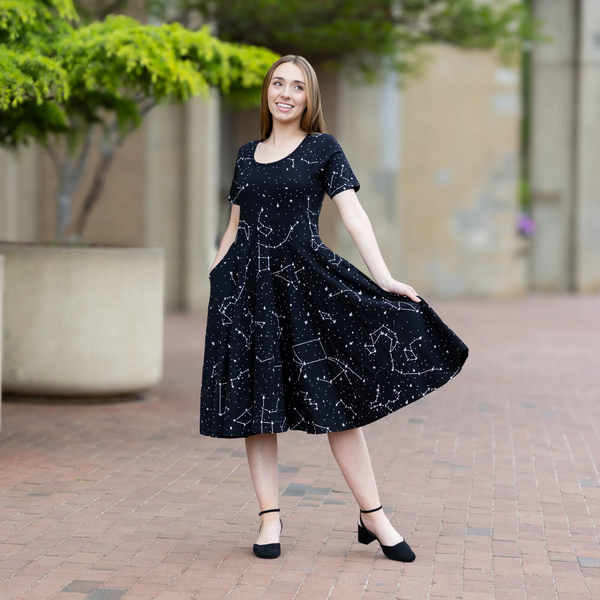







"I had been seeing Svaha's dresses for years. Their pockets, my gosh, and they're cotton, my goodness. And their geeky science themes that Ms. Frizzle would wear. I'm like, this is a match made in heaven."
—Cora
Print designer & independent artist


We partner with clean factories that provide fair wages and great conditions. When you shop Svaha, you're supporting a woman-owned, minority-owned business that designs with purpose.

"I had been seeing Svaha's dresses for years. Their pockets, my gosh, and they're cotton, my goodness. And their geeky science themes that Ms. Frizzle would wear. I'm like, this is a match made in heaven."
—Cora
Print designer & independent artist
Svaha prints are created by independent artists, and some of our favorites started with a cold email. Cora discovered the contact page, and figured why not? She sent Svaha an email, a total stranger with a love for science and watercolor, hoping to collaborate on future prints.
Ten designs later, Cora's work is some of the most-loved art in the Svaha closet. We sat down with her about why she believes a good illustration can teach you something about the natural world.
Cora, independent illustrator and artist, was the kid who drew lots and lots of horses. As a teen, an opportunity at the Field Museum in Chicago introduced her to botanical illustration for science. When a new plant specimen arrives in a museum collection, it's usually dried and flat. The illustrator's job is to bring it back to life on paper, showing what you'd actually see if you found it in the wild.
Cora was determined to become a scientific illustrator. So rather than an art degree, she earned a degree in biology at Northern Michigan University, so she could speak the language of science fluently.
Cora sketches her ideas digitally first, so she can move a bird or resize a flower without starting over. Then she transfers the sketch to watercolor paper and paints it by hand. As Cora shares, "Getting to dig into watercolor and get the colors where I want and the details right. Mm, that makes my heart happy."
Most designs take two to three months from start to finish.
For Cora, scientific accuracy is the point of her illustrations. Raised by two educators, a high school science teacher and geologist dad and a botanist mom who wrote science curriculum, Cora believes art can teach science (even without an explaination).
"If I can accurately illustrate the relationship between two species, I'm increasing the education of the population just by putting that out there."
You can see it in every print she's made for us.
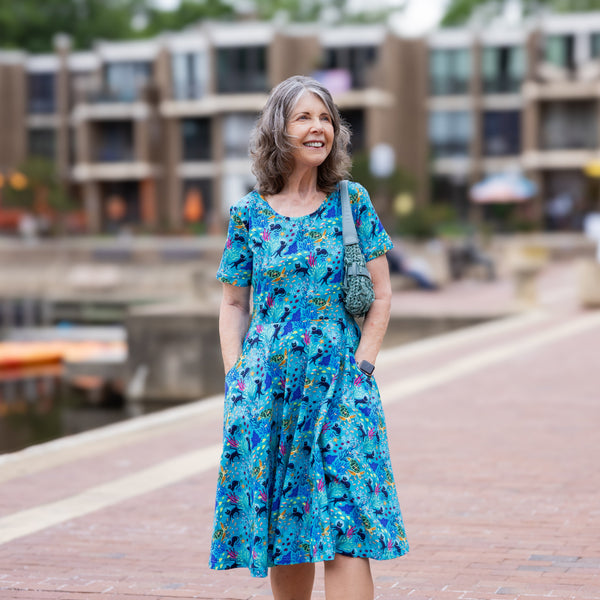
| Cora got to learn about tortoise species from all over the world, quite a change of pace for someone living in Minnesota. Cora researched tortoise care to make sure every plant in the pattern is one you could safely feed a tortoise. Look for hibiscus and a few kinds of prickly pear cactus, whose fruit and blossoms tortoises love. | |
| Cora's first Svaha print celebrates the female birds who never get any love because their male counterparts are more colorful. She chose species she knows from her home in northern Minnesota, some summer visitors and some year-round residents. Since the hens are understated by design, she paired them with colorful native plants to make the print pop. | |
| Cora wanted it accurate enough that a teacher or professor could wear it to class and answer students’ questions with confidence. So she translated the flat 2D formulas we all learned in school into 3D ball-and-stick models, color-coded by element. The orange atoms, for example, are phosphorus. She built her list starting with diatomic molecules, like nitrogen, which is simply two of the same atom bonded together. Then she added molecules that reused those elements and colors, such as methane and phosphorus nitride, with its triple bond. | |
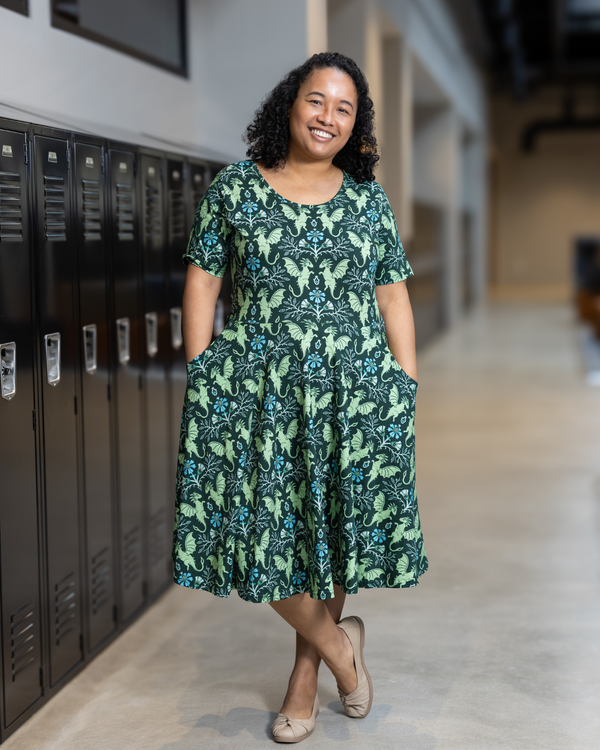
| Her most stubborn design. She originally wanted an ocean-themed design, and started her sketches with the ocean in mind. Her early sketches lined up sea urchins, otters, krill, and whales. But the scale that fits a krill and a whale on the same print became nearly impossible. Only when her husband suggested birds did Cora's concept come together. Once Cora had her top predator, she could build the food web backwards, one trophic level at a time. |
Ask Cora which of her prints she most hopes to spot out in the world, and she doesn't hesitate: Science She Wrote. Featuring women scientists with published works, the challenge was, how to pick just a few female scientists among so many? Cora started with names many of us know, women from different fields who have earned plenty of press: Jane Goodall, Marie Curie, and Katherine Johnson. But she deliberately made room beside them for women who never got the same attention, like Maria Sibylla Merian.
This scientist is a personal one for Cora. Merian was one of the very first scientific illustrators, and she brought remarkable patience to her observations. She painted butterflies and moths in watercolor alongside the very plants they ate and laid their eggs on. Her work is among the earliest records of those life cycles, and of how species connect within an ecosystem.
It's easy to see Cora's own approach in that description: watercolor, careful observation, and species shown together so the art teaches the relationship. Yet Merian received little credit in her lifetime. Some of her work was claimed by others, and some was dismissed outright. Cora saw the print as a chance to set that right in a small way, placing Merian's name right alongside the famous ones.
"I wonder if people get the print and go, 'I know this one, and this one, but who is…' and then go look it up. That would be my delight."
We'd bet more than a few people learned about Maria Sibylla Merian because of Cora's work on this print.
Cora gave us a tip: when it arrives, look closely at the beaks. Most of these finches share the same browns, blacks, and grays, but some have beaks as chunky as wire cutters...