
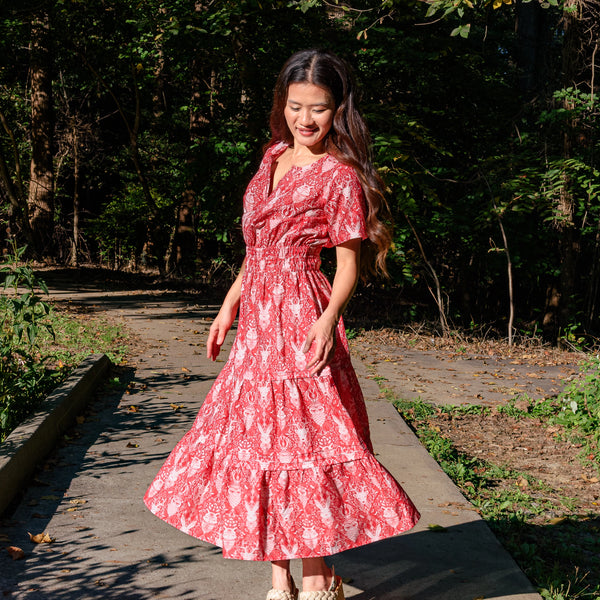
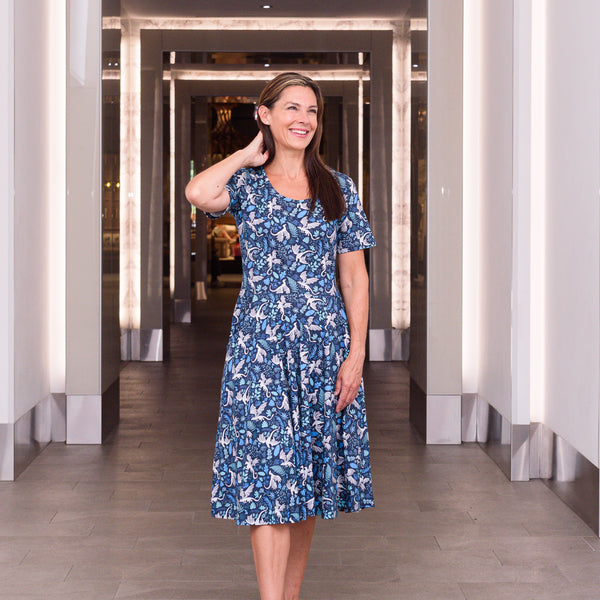
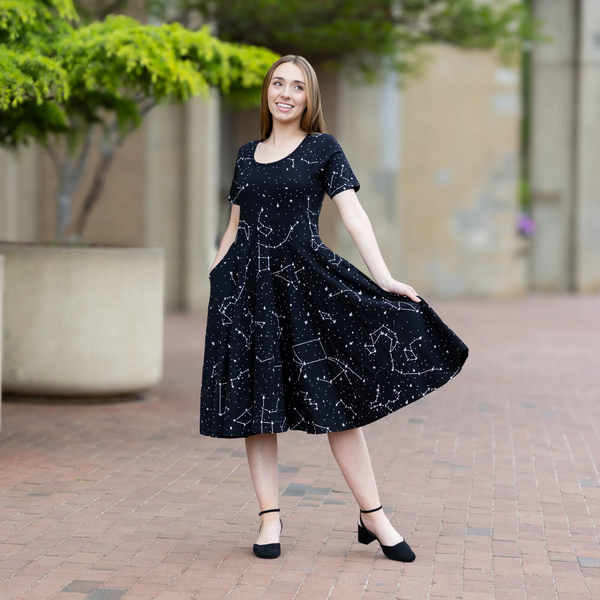


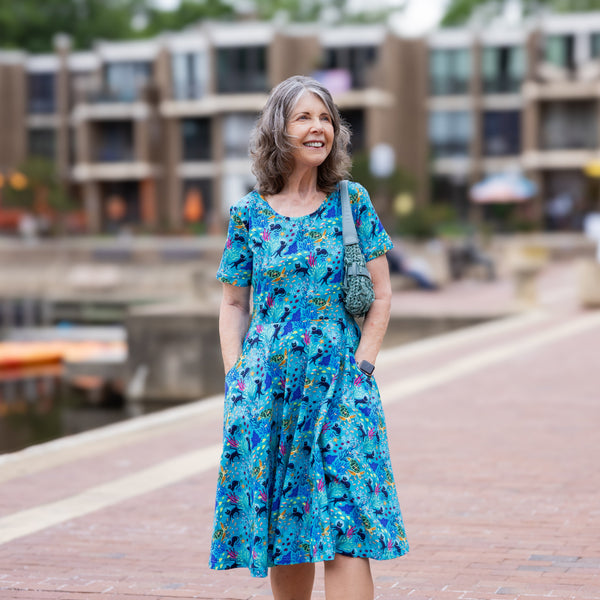
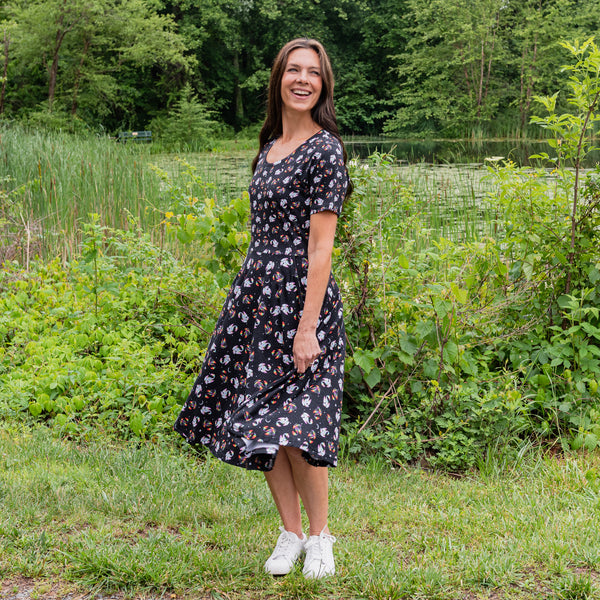




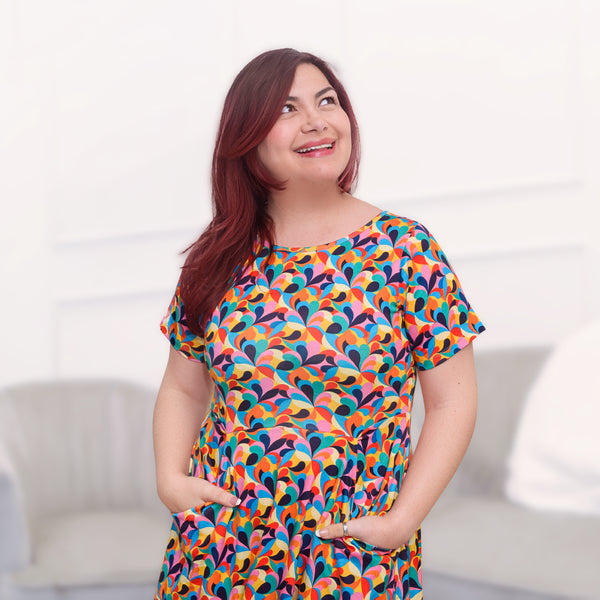
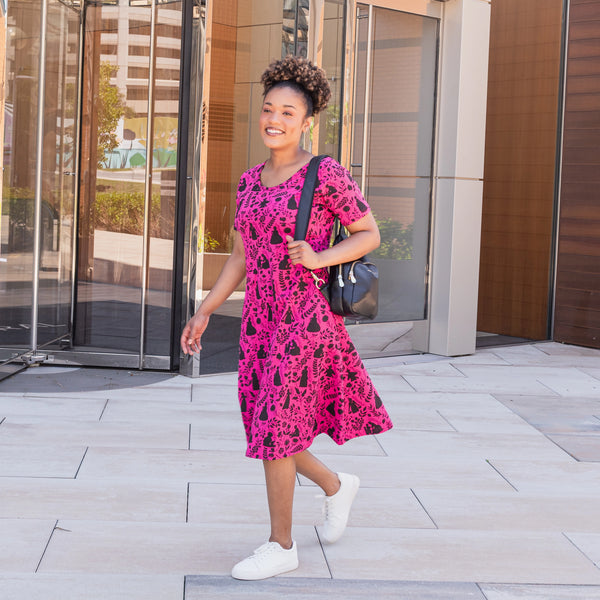
Every dress tells a story. This one just happens to include a food web, two cellular power plants, and a very good reason to bring up photosynthesis at your next dinner party. Meet the Trophic Levels Dress. Let's break down exactly what's happening on this fabric, one trophic level at a time.
The Trophic Levels Dress
What is a trophic level, anyway?
A trophic level is just a fancy way of describing who eats whom — or more specifically, classifying where an organism sits in the flow of energy through an ecosystem. Energy doesn't just appear out of thin air (well, except for the sun part, more on that in a second). It has to be captured, passed along, eaten, digested, and used, over and over, up the chain. That chain is what you're wearing.
Level 1: The Producer
Every food web starts with a producer — an organism that makes its own energy instead of eating something else to get it. On this dress, that role belongs to the rose.
Plants are autotrophs, meaning "self-feeders." Using chloroplast, you'll spot these little green structures worked into the print too, roses take sunlight, water, and carbon dioxide and turn them into sugar through photosynthesis. That sugar is the ecosystem's original energy deposit. Everything else on this dress is essentially living off the rose's ability to self-feed.
Level 2: The Consumer
The heterotrophs, organisms that can't make their own food and have to eat something else to get energy, make the second level. Roses are a favorite host plant for several moth species, and four of them made it onto the dress, shown both as caterpillars and as full-grown adults:
- Cecropia moth: North America's largest moth
- Automeris io moth: famous for the giant "eyespots" on its hindwings
- Apple sphinx moth: large, mostly gray moth in North America
- Blinded sphinx moth: due to their brown edged wings, they hide perfectly as dead leaves
As caterpillars, these guys munch on rose leaves, converting the plant's stored sugar into their own body mass. That's a trophic level transfer happening right there on a leaf — sunlight → plant → caterpillar.
Level 3: The Secondary Consumer
Look toward the background of the print and you'll notice silhouettes gliding across the sky: barn swallows and chimney swifts. Both are insectivores that snatch up moths (and other flying insects) mid-air as a primary food source.
By eating the moths, these birds are consuming energy that was captured by the rose, passed to the caterpillar, carried through metamorphosis into the adult moth, and finally handed off to them. That's three full trophic transfers of the same sunbeam.
Thinking about wearing Trophic Levels?
When you put on this dress, you're wearing an entire energy ecological story: sunlight captured by chloroplasts in rose leaves, eaten by caterpillars, carried through metamorphosis into moths, and finally consumed by swallows and swifts swooping through the sky above. It's genuinely great twirl dress that sparks conversation and curiousity.
Perfect for the classroom, the museum, or just the next time someone asks, "wait, what is happening on your dress?"
How to style the Trophic Levels Twirl Dress
| For the classroom or lab
| White sneakers or flats, a navy blazer, and small gold or silver studs. Add a canvas tote for grading papers or carrying field notes.
|
| For the museum or science event
| This is a great excuse to bring out a fun pair of earrings — moth-shaped or otherwise nature-inspired jewelry pairs perfectly here. Pair with white platform sneakers or block-heel sandals and a structured crossbody bag. |
| For a casual outing
| Dress it down with slip-on sandals, a denim or jean jacket tied at the waist, and a baseball cap. The side pockets mean you can skip the purse altogether — just grab your keys and go. |
| For layering into cooler weather
| Add opaque tights in white, cream, or navy and knee-high boots, then top with a solid-color cardigan that pulls one shade from the print (sage green and dusty rose both work beautifully). |
| The styling shortcut | Because the print carries so much visual interest on its own, the easiest styling rule is: keep accessories simple, pull one color from the dress for your shoes or outerwear, and let the print be the focal point of the outfit.
|
FAQs
Is this dress good for teachers or science educators?
Yes. It's designed with science lovers and educators in mind — great for the classroom, a science event, or any setting where you want to spark a conversation about ecology and biology.
What is the Trophic Levels Dress made of?
t's crafted from soft, breathable 100% organic cotton knit fabric, with a 3/4 circle twirl skirt, side pockets, and a pull-on, tagless design for everyday comfort.
How do you wash the Trophic Levels Dress?
Machine wash cold, inside out, to help protect the digitally printed design. Tumble dry low or lay flat to dry. The fabric is preshrunk, so it's made to hold its fit wash after wash.